



A few years ago, the Environmental Protection Agency (EPA) reported something that surprised many homeowners:
Indoor air can be 2 to 5 times more polluted than outdoor air.
In some homes, it’s even worse.
Even if you keep a spotless home, cleaning alone isn’t enough to ensure healthy indoor air.
Modern homes are built tighter and more energy efficient than ever before. While that’s great for utility bills, it also means airborne pollutants can become trapped inside — circulating again and again through your HVAC system.
If you want cleaner, healthier indoor air, you need a whole-home strategy.
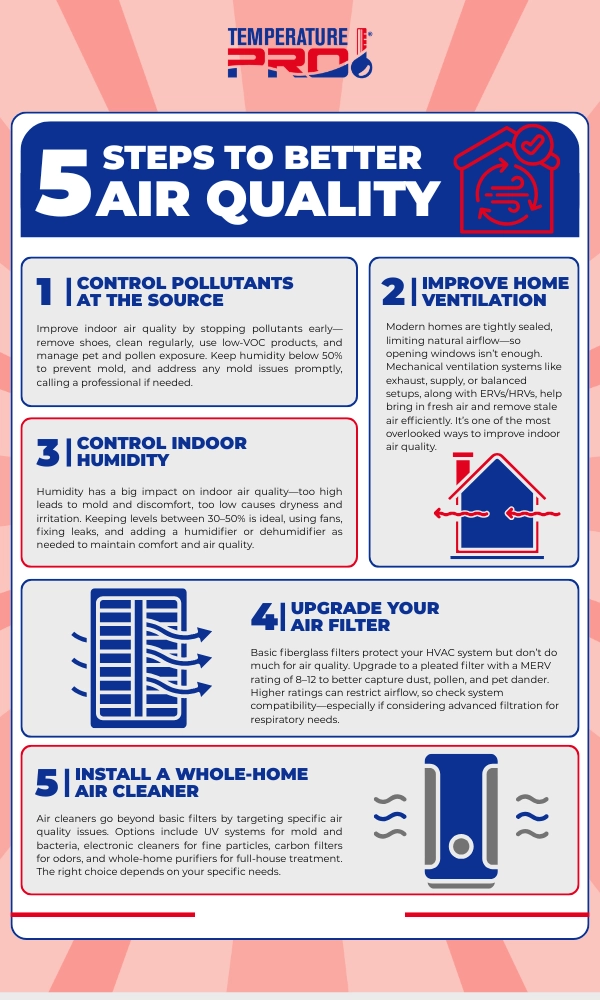
Here are five proven ways to improve your indoor air quality.
Why Indoor Air Gets Polluted
Today’s airtight homes trap more than conditioned air. They also trap pollutants such as:
- Volatile Organic Compounds (VOCs) from cleaners, furniture, paint, and building materials
- Dust and dust mites
- Pet dander
- Pollen
- Mold spores
- Bacteria and viruses
- Smoke and household odors
These pollutants can contribute to:
- Allergy flare-ups
- Asthma symptoms
- Headaches and fatigue
- Respiratory irritation
- Eye and skin irritation
Improving indoor air quality isn’t about one single fix — it’s about reducing pollutants at multiple levels.
1. Control Pollutants at the Source
The most effective way to improve indoor air quality is to stop pollutants before they spread.
Practical steps include:
- Remove shoes at the door
- Store chemicals tightly sealed and preferably outside living spaces
- Choose low-VOC or natural cleaning products
- Air out new furniture or building materials before bringing them indoors
- Brush pets outdoors and bathe regularly
- Change clothes after heavy pollen exposure
- Vacuum frequently using a HEPA-filter vacuum
- Wash bedding weekly in hot water
Manage Mold Proactively
Keep indoor humidity below 50%.
Address leaks immediately, and if mold is discovered:
- Small, non-porous surface mold can sometimes be cleaned properly
- Porous surfaces (drywall, insulation, wood) often require professional remediation
If you suspect widespread mold growth, consult a professional.
2. Improve Whole-Home Ventilation
Because modern homes are tightly sealed, natural air exchange is limited.
Opening windows occasionally helps, but it’s not a complete solution — especially in extreme climates.
Professional ventilation options include:
Exhaust Ventilation
Removes polluted air from high-moisture areas like bathrooms and kitchens.
Supply Ventilation
Brings fresh outdoor air into the home through ductwork.
Balanced Ventilation
Introduces fresh air while removing stale air at equal rates.
Energy Recovery Ventilators (ERVs) or Heat Recovery Ventilators (HRVs)
These systems exchange stale indoor air with fresh outdoor air while recovering heating or cooling energy — improving air quality without sacrificing efficiency.
Ventilation is one of the most overlooked indoor air quality upgrades.
3. Control Indoor Humidity
Humidity plays a major role in indoor air quality.
High humidity:
- Encourages mold growth
- Allows dust mites to thrive
- Makes occupants feel warmer
- Increases strain on cooling systems
Low humidity:
- Causes dry skin and irritation
- Increases static electricity
- Can aggravate respiratory discomfort
The ideal indoor humidity range is typically 30–50%.
To manage humidity:
- Use exhaust fans in kitchens and bathrooms
- Repair plumbing leaks promptly
- Install a whole-home dehumidifier (especially in humid climates)
- Consider a humidifier in dry winter climates
Humidity control improves both comfort and air quality.
4. Upgrade Your Air Filter
Basic fiberglass filters are designed primarily to protect HVAC equipment — not improve air quality.
For better filtration, use a pleated air filter with a MERV rating between 8 and 12, depending on system compatibility.
Higher MERV ratings:
- Capture smaller particles
- Trap pollen and pet dander
- Reduce airborne debris
However, filters rated too high (above MERV 12) can restrict airflow in many residential systems unless specifically designed for it.
If someone in your home has asthma or chronic respiratory issues, your HVAC system may be upgraded to accommodate higher filtration levels.
Always confirm compatibility with a licensed HVAC professional.
5. Install a Whole-Home Air Cleaner
Air cleaners go beyond standard filtration.
Depending on your needs, options include:
UVGI (Ultraviolet Germicidal Irradiation)
Installed near coils or inside ductwork to reduce biological growth like mold and bacteria.
Bulbs require periodic replacement to remain effective.
Electronic or Electrostatic Air Cleaners
Use charged plates to capture fine particles and require regular cleaning for peak performance.
Activated Carbon Filters
Help reduce odors, smoke, and gaseous pollutants.
Whole-Home Air Purifiers
Installed directly into your HVAC system to treat air throughout the entire house — typically more effective than portable units.
Choosing the right system depends on your specific air quality concerns.
A Whole-Home Strategy Works Best
There is no single “magic fix” for indoor air quality.
The most effective approach combines:
- Source control
- Proper ventilation
- Humidity management
- High-quality filtration
- Targeted air purification
When these elements work together, indoor air becomes cleaner, healthier, and more comfortable.
Improve Your Indoor Air with TemperaturePro
At TemperaturePro, we help homeowners create customized indoor air quality solutions.
Our licensed HVAC professionals can:
- Evaluate your current system
- Test humidity levels
- Inspect ductwork
- Recommend appropriate filtration upgrades
- Install whole-home air purification systems
- Improve ventilation performance
If you’re concerned about the air you’re breathing at home, we’re here to help.
Schedule your indoor air quality consultation today and breathe easier with confidence.